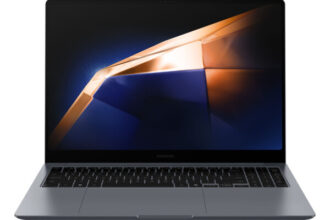
The MacBook Pro M5 Pro (2026 Edition) sets a new benchmark for performance, battery life, and creative workflow efficiency. Powered by Apple’s M5 Pro chip, this model delivers exceptional speed for video editing, music production, coding, and machine learning — while maintaining impressive battery longevity.
If you need a laptop that can replace a desktop workstation, the M5 Pro is one of the strongest machines available in 2026.
⭐ Quick Verdict
The best creative and professional laptop of 2026, offering unmatched performance, top-tier thermal management, and industry-leading battery life in a premium chassis.
Key Specifications (2026 Model)
| Component | Details |
|---|---|
| CPU | Apple M5 Pro |
| GPU | Integrated M5 Pro GPU (Pro-level cores) |
| Display | 14″ or 16″ Liquid Retina XDR Mini-LED |
| RAM | 32GB / 48GB / 64GB Unified Memory |
| Storage | 512GB – 4TB SSD |
| Battery | 22–28 hours (depending on screen size) |
| Weight | 1.6 kg (14″) / 2.1 kg (16″) |
| Ports | 3× Thunderbolt 4, HDMI, SD card, MagSafe |
| OS | macOS Sequoia (2026) |
Pros
- Best-in-class performance for creative workloads
- Silent, cool, and extremely efficient
- World-leading Mini-LED display quality
- Long battery life for a performance laptop
- Excellent build quality & reliability
- Strong app optimisation (Final Cut, Logic, Adobe, DaVinci)
Cons
- High price
- Non-upgradable memory
- macOS limits gaming options
- Heavier than ultrabooks
Best For
✔ Video editors (4K, 6K, 8K workflows)
✔ Music producers & audio engineers
✔ Photographers & designers
✔ Developers & data scientists
✔ Creators and YouTubers
✔ Professionals needing workstation-level power
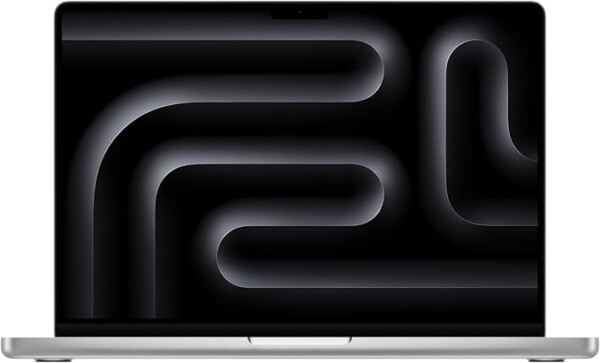
MacBook Pro M5
Apple MacBook Pro 14.2-inch Laptop with M5 chip with 10 core CPU and 10 core GPU: Built for Apple Intelligence, Liquid Retina XDR Display, 16GB Unified Memory, 1TB SSD Storage; Silver
Buy Now →Related Laptop Guides
- Best Laptops for Creators 2026
- Best MacBooks 2026
- Best Laptops for Video Editing 2026
- Best Workstation Laptops 2026
❓ Frequently Asked Questions
Is the MacBook Pro M5 Pro good for 8K editing?
Yes — it handles 8K footage smoothly thanks to higher GPU core counts and improved media engines.
Is the 14-inch or 16-inch better?
- 14-inch: Better portability, still powerful.
- 16-inch: Better thermals, longer battery, larger display — best for pro editors.
Does it run hot under load?
No — Apple’s cooling system is extremely efficient, keeping the laptop cool and quiet.
Can the memory be upgraded later?
No — choose the RAM you need upfront.
Related Posts
- Best Laptops 2026 – The Buyer’s Guide
- MacBook Air M5 (2026 Edition) – Full Review and Buyer’s Guide
- HP Spectre x360 (2026 Edition) – Full Review and Buyer’s Guide
- ASUS ROG Zephyrus G16 (2026 Edition) – Full Review
- Lenovo ThinkPad X1 Carbon Gen 14 – Full Review
- Lenovo Yoga Slim 7i (2026 Edition) – Full Review
M5 Pro vs M5 Max: Which Model Should You Buy?
The M5 Pro is exceptional, but Apple also offers the M5 Max — a higher-end chip with more GPU cores and superior thermal capacity. Deciding between them depends entirely on your workload and budget.
M5 Pro is right for:
- Video editors under 4K: Smooth 4K editing with colour grading, effects, and transitions. Most YouTube creators and commercial videographers need nothing more.
- Photographers & graphic designers: Lightroom, Photoshop, and Capture One run flawlessly. Adobe’s GPU acceleration works perfectly on Pro.
- Developers & data scientists: Compiling, training models, running databases — the Pro’s 12-core GPU is more than adequate for most coding work.
- Music producers: Logic Pro, Ableton, and professional audio plugins run without limitation. The Pro handles 200+ tracks with heavy plugin chains.
- Budget-conscious professionals: The Pro offers 90% of Max’s real-world performance at £2,000–3,000 less, depending on configuration.
M5 Max is better if you:
- Edit 6K, 8K, or heavy RAW footage — the Max’s 16-core GPU provides significant rendering speed-ups for extreme workflows.
- Work with large machine learning models — 96GB unified memory and Max’s GPU acceleration reduce training time substantially.
- Demand absolute best thermals under sustained load — Max dissipates heat more efficiently during multi-hour rendering sessions.
- Plan to keep the laptop 6–8 years — Max’s headroom means less throttling in future macOS versions and demanding applications.
- Have unlimited budget and want every advantage — professional studios often specify Max for peace of mind.
Pricing reality: In the UK, the M5 Pro starts at £1,999 (14-inch, 32GB). The M5 Max starts at £3,499. For most professionals — editors, designers, developers — the Pro delivers excellent value. Max is only justifiable if your workload genuinely needs sustained high GPU performance or you’re purchasing for a studio environment where time-to-completion justifies the cost.
Storage & Memory: Choosing the Right Configuration
Since the M5 Pro’s memory and storage cannot be upgraded after purchase, selecting the correct configuration from the outset is crucial. Making the wrong choice could leave you with an underpowered machine or wasting money on unnecessary capacity.
Memory (Unified)
For most professionals, 32GB is the starting point and sufficient for 4K video editing, music production, graphic design, and development work. However, your workload may demand more:
- 32GB: Ideal for 4K editing, music production, web design, software development, and everyday creative tasks
- 48GB: Best for 6K/8K workflows, heavy multitasking, large image files (photography), and complex 3D rendering
- 64GB: Necessary only for professional video houses handling 8K RAW footage, extreme multitasking, or running virtual machines and large datasets simultaneously
Unless you’re pushing 8K workflows or running heavy virtual environments, 32GB handles virtually all professional tasks efficiently. The M5 Pro’s architecture is remarkably efficient, so you genuinely won’t need 64GB for standard work.
Storage (SSD)
512GB is the absolute minimum and fills quickly if you’re working with video or music. Most professionals should budget for 1TB as standard. Here’s the breakdown:
- 512GB: Only viable if you routinely offload footage to external drives and delete project files frequently
- 1TB: Sweet spot for most creators — room for OS, applications, and active projects without constant housekeeping
- 2TB+: Recommended for video editors, audio engineers, or photographers who keep large libraries on-device
Price differences between storage tiers are substantial, so buy what you genuinely need. External Thunderbolt 4 SSDs are fast enough for overflow storage and cost-effective compared to internal upgrades.
Practical Recommendation: Start with 32GB/1TB for most professionals. Jump to 48GB only if you’re editing 6K footage or running memory-intensive applications daily. Storage tier depends entirely on your file volume — if unsure, 1TB is the sensible default.