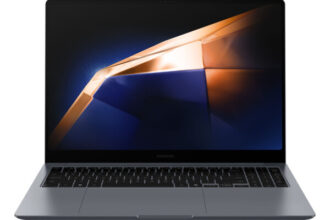
The MacBook Air M5 (2026) builds on Apple’s reputation for efficiency, battery life, and portability. With the new M5 chip, Apple pushes the Air line further into ultra-long battery life, silent performance, and AI-enhanced workflows.
This is one of the best lightweight laptops of 2026 — perfect for students, office workers, travellers, and productivity-focused users.
⭐ Quick Verdict
One of the lightest and longest-lasting laptops of 2026, offering premium performance in a fanless, silent design. Ideal for everyday users and professionals who want portability without compromise.
Key Specifications (2026 Model)
| Component | Details |
|---|---|
| CPU | Apple M5 processor |
| GPU | Integrated M5 graphics |
| Display | 13″ or 15″ Liquid Retina (500 nits) |
| RAM | 8GB / 16GB / 24GB / 32GB Unified Memory |
| Storage | 256GB – 2TB SSD |
| Battery | 25–30 hours (real-world estimate) |
| Weight | 1.2–1.4 kg depending on size |
| Ports | 2× USB-C / Thunderbolt, MagSafe |
| OS | macOS Sequoia (2026) |
Pros
- Class-leading battery life
- Silent operation (fanless design)
- Ultra-thin and lightweight
- Bright, colour-accurate display
- Excellent trackpad & keyboard
- Great value for Apple quality
Cons
- Limited port selection
- Base 8GB RAM model not suited for heavy workloads
- Not ideal for gaming or 4K video editing
Best For
✔ Students
✔ Home office & business users
✔ Frequent travellers
✔ Remote workers
✔ Writers & productivity users
✔ Anyone wanting a quiet, cool laptop
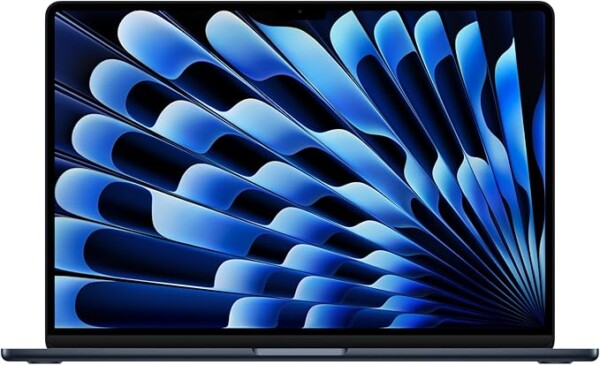
MacBook Air M5
Apple 2026 MacBook Air 15-inch Laptop with M4 chip: Built for Apple Intelligence, 15.3-inch Liquid Retina Display, 16GB Unified Memory, 256GB SSD Storage, 12MP Center Stage Camera, Touch ID; Midnight
Buy Now →MacBook Air M5
Apple 2026 MacBook Air 13-inch Laptop with M4 chip: Built for Apple Intelligence, 13.6-inch Liquid Retina Display, 16GB Unified Memory, 256GB SSD Storage, 12MP Center Stage Camera, Touch ID; Midnight
Related Laptop Guides
- Best Laptops 2026
- Best Lightweight Laptops 2026
- Best Laptops for Students 2026
- Best Battery Life Laptops 2026
❓ Frequently Asked Questions
Is the MacBook Air M5 good for video editing?
Yes, for light 1080p and some 4K tasks — but for heavy editing, the MacBook Pro M5 is a better choice.
Does the MacBook Air M5 overheat?
No — it’s fanless and designed for cool, silent performance under typical workloads.
Is the 15-inch model worth it?
Yes if you want:
✔ a larger display
✔ better speakers
✔ slightly better thermals
Can it run Windows?
Not natively — only via virtualisation tools like Parallels.
Related Posts
- Best Laptops 2026 – The Buyer’s Guide
- MacBook Pro M5 (2026 Edition) – Full Review and Buyer’s Guide
- HP Spectre x360 (2026 Edition) – Full Review and Buyer’s Guide
- Lenovo Yoga Slim 7i (2026 Edition) – Full Review
- ASUS ROG Zephyrus G16 (2026 Edition) – Full Review
- Dell XPS 15 (2026 Edition) – Full Review and Buyer’s Guide
Choosing Your Configuration: RAM & Storage Guide
The MacBook Air M5 comes in several configurations, and your choice of unified memory and storage will significantly affect both performance and longevity. Here’s what you actually need for different use cases.
RAM: 8GB, 16GB, 24GB or 32GB?
The base 8GB model is genuinely adequate for everyday tasks: web browsing, email, light document editing, and streaming. However, if you multitask regularly—say, having 20+ browser tabs open alongside Slack, email, and a text editor—you’ll notice slowdowns. The M5’s unified architecture means it shares memory between CPU and GPU, which is more efficient than Intel systems, but 8GB is still tight for professional workflows.
For most buyers, 16GB strikes the right balance. It handles moderate multitasking, light photo editing, and development work without compromise. If you use video editing software (Premiere Pro, Final Cut Pro), music production, virtualisation, or run multiple virtual machines, jump to 24GB or 32GB. The memory is soldered onto the logic board, so you cannot upgrade later—choose carefully.
Storage: 256GB, 512GB, 1TB or 2TB?
A 256GB drive fills quickly with modern applications and media. Expect roughly 150GB available after macOS Sequoia, system files, and pre-installed applications. If you store photos, video, or large development projects locally, this becomes cramped fast. Most users should aim for 512GB minimum—it leaves comfortable breathing room and costs only £180–200 more than the base model.
If you handle video files, large software development environments, or archive years of documents locally, 1TB is more sensible than constantly managing storage limits. The 2TB option is overkill unless you’re a creative professional working entirely offline.
Storage Expansion?
Storage is soldered and non-upgradeable, so buy more upfront rather than regret it later. Cloud storage (iCloud, OneDrive) can mitigate this, but local speed matters for video editing and development work.
Configure wisely: 16GB RAM and 512GB storage is the sweet spot for most professionals, whilst students and casual users can manage with 16GB and 256GB if they use cloud services actively.
Warranty, Repair Costs, and Support in the UK
The MacBook Air M5 comes with Apple’s standard one-year limited warranty covering manufacturing defects and hardware faults. Unlike Windows laptops, accidental damage isn’t covered as standard. If you’re concerned about drops, spills, or damage, AppleCare+ extends coverage to three years and covers two accidental damage incidents, each with an £80–100 excess. AppleCare+ costs approximately £99–129 depending on your screen size.
UK repair support is reliable. You can book repairs at any Apple Store (including John Lewis locations), visit an Apple Authorised Service Provider, or send your device for repair by post. Most repairs take 3–5 working days. However, out-of-warranty repairs are expensive: screen replacement costs £300–400, battery replacement £120–180, and logic board faults often exceed £600. AppleCare+ makes financial sense here—your excess caps at £80–100, far cheaper than a single out-of-warranty repair and often cheaper than a screen replacement alone.
An often-overlooked advantage: MacBooks retain their value far better than Windows laptops. A two-year-old MacBook Air typically resells for 60–70% of its original UK price in the secondhand market. If you buy a 13″ model at £1,199 and sell it after two years for around £720, you’ve effectively paid only £240 per year. When combined with AppleCare+ protection and Apple’s superior build quality, your total cost of ownership is often lower than Windows alternatives, despite the higher upfront price.
For UK purchases, buy directly from Apple.com/UK, John Lewis, or Currys—these guarantee full UK warranty rights and statutory consumer protection. Avoid grey imports and non-official retailers; warranty support becomes complicated outside official channels, and you’ll lose UK consumer protection rights.