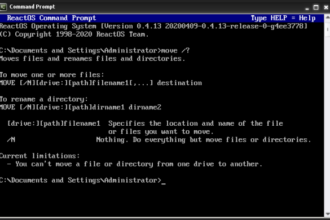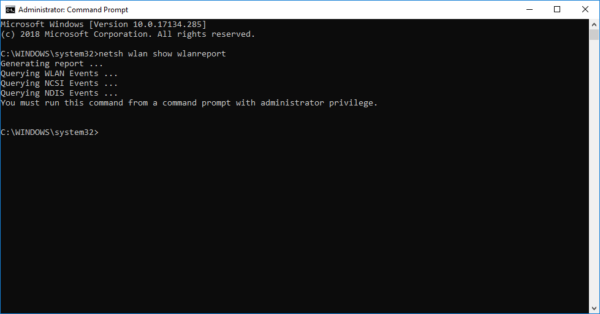
How Do You Open Command Prompt in Windows, Command Prompt (also called CMD) is a built-in Windows tool that allows you to run DOS commands by typing them instead of clicking with a mouse.
There are several ways to open Command Prompt, depending on what you are trying to do and whether Windows is working normally.
This guide shows all common methods, step by step.
Method 1: Open Command Prompt Using Search (Easiest)
This is the most common and beginner-friendly method.
Steps:
- Click the Start menu
- Type Command Prompt or CMD
- Click Command Prompt in the results
Command Prompt will open in a normal user mode.
Use this for:
- Learning DOS commands
- Basic file and folder tasks
- Safe everyday use
Method 2: Open Command Prompt as Administrator
Some DOS commands require administrator privileges to work correctly.
Steps:
- Click the Start menu
- Type Command Prompt or CMD
- Right-click Command Prompt
- Select Run as administrator
- Click Yes if prompted
You will see “Administrator” in the title bar when it opens.
Use this for:
- System repairs
- Disk checks
- Fixing Windows errors
Method 3: Open Command Prompt Using Run
This is a fast keyboard-based method.
Steps:
- Press Windows Key + R
- Type
cmd - Press Enter
Command Prompt opens instantly.
This is useful when:
- You prefer keyboard shortcuts
- You need quick access
Method 4: Open Command Prompt from File Explorer
You can open Command Prompt directly inside a folder.
Steps:
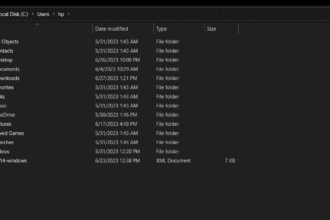
- Open File Explorer
- Navigate to any folder
- Click in the address bar
- Type
cmd - Press Enter
Command Prompt opens already set to that folder.
This is ideal for:
- File management
- Copying or deleting files
- Running commands in a specific location
Method 5: Open Command Prompt When Windows Will Not Start
When Windows will not load properly, Command Prompt is still available through recovery tools.
Steps (simplified):
- Restart your computer
- Interrupt startup 2–3 times to trigger recovery
- Select Troubleshoot
- Choose Advanced options
- Select Command Prompt
This method is used for:
- Repairing Windows
- Recovering files
- Advanced troubleshooting
We cover these commands in the Windows Repair section.
What Is the Difference Between Command Prompt and PowerShell?
Many users see both and are unsure which to use.
- Command Prompt runs DOS commands
- PowerShell is more advanced and script-based
For beginners and DOS learning:
Start with Command Prompt
DOS knowledge transfers cleanly into PowerShell later.
Common Problems When Opening Command Prompt
If Command Prompt:
- Opens then closes immediately
- Shows access denied errors
- Is blocked by a company policy
These issues are covered in our DOS Problems & Fixes section.
Where to Go Next
Now that you can open Command Prompt, the next step is learning your first command.
Recommended next guides:
Start slow. One command at a time.
Related Posts
- What Is DOS?
- What Are DOS Commands?
- DOS Commands List (Easy Reference)
- DOS Commands Not Working? Start Here
- Command Prompt vs PowerShell
Method 6: Open Command Prompt in Safe Mode
Safe Mode is a Windows diagnostic mode that loads the operating system with only essential drivers and services, minimising interference from third-party software and malware. If your system is infected with a virus, or normal Command Prompt access is restricted by software conflicts, Safe Mode provides a clean environment for troubleshooting and repairs without background interference.
Steps to open Command Prompt in Safe Mode:
- Restart your computer completely
- Press the F8 key repeatedly before the Windows logo appears. (On Windows 10 and 11, F8 is often disabled by default. If this does not work, proceed to the next step.)
- If F8 fails, restart your computer again and type
msconfigat the lock screen - Press Enter to open the System Configuration window
- Click the Boot tab at the top of the window
- Tick the “Safe Mode” checkbox and select your preferred variant below
- Click Apply, then click OK to save your selection
- Click Restart when prompted to reboot into Safe Mode
Safe Mode variants and when to use them:
- Safe Mode — loads a minimal desktop. Command Prompt is accessible via Search or the Run dialogue (Windows Key + R). Use when Windows starts but has performance or stability problems in normal mode.
- Safe Mode with Command Prompt — boots directly to a full Command Prompt window without any graphical interface. Use when the Windows desktop fails to load.
- Safe Mode with Networking — includes network drivers and internet access. Use if you need to download drivers or security software during troubleshooting.
Safe Mode Command Prompt is ideal for:
- Removing malware and viruses safely without antivirus software conflicts
- Running System File Checker (SFC) to repair corrupted Windows files
- Disabling faulty drivers that prevent normal system startup
- Accessing your files when Windows is unstable or unusable
- Running diagnostic commands without interference from background applications
Important: After troubleshooting, you must disable Safe Mode. Return to msconfig, uncheck Safe Mode on the Boot tab, click Apply and OK, then restart normally. Failure to do so will cause Windows to load in Safe Mode every time.
Safe Mode is a powerful troubleshooting tool, but reserve it for serious issues. For everyday tasks, the simpler methods (Search, Run, or File Explorer) are faster and more convenient.